From Design File to Embroidered Reality: A Love and Coffee Review
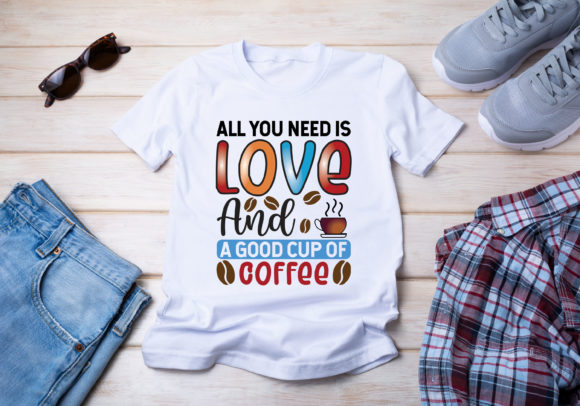
Opening a new embroidery file is a moment of potential. You’re looking not just at shapes on a screen, but at a future project—a sweatshirt, a tote bag, a gift that will carry this sentiment into the world. The All You Need is Love and a Good Cup of Coffee design landed in my library with that familiar promise. As a designer who both creates and critiques, my first question is always practical: how will this transition from digital graphic to stitched textile?
The Warm First Impression: A Design That Speaks Softly
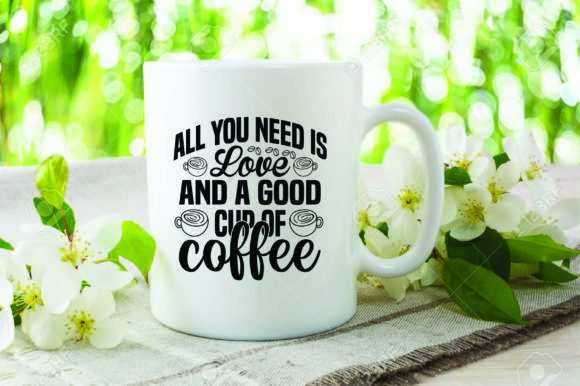
The immediate mood here is cozy and conversational. It’s not a shout; it’s a smile. The phrase “All You Need is Love and a Good Cup of Coffee” has a universal, friendly charm, and the layout typically supports that with a balanced, approachable flow. It feels like a design meant for shared moments—a gift for a friend, a product for a cozy boutique, a personal touch on a kitchen towel. This isn’t a high-drama graphic; its personality is gentle, making it a natural fit for projects where the message is as important as the aesthetics.
Thinking about its application, I immediately picture it on a mid-weight cotton tote bag or the breast of a soft sweatshirt. The theme lends itself perfectly to personalized gifts and small shop merchandise. For an Etsy seller specializing in mindful comforts or a crafter making items for a local café, this design acts as a ready-made brand statement. Its visual personality suggests it would stitch out cleanly, with details that are likely clear but not overly intricate, aiming for readability and warmth over complex artistry.
Stitching It Into Life: Real-World Project Scenarios
Let’s walk through a real case. Imagine you’re preparing a custom order for a client who wants an embroidered apron as a wedding gift for a couple who owns a coffee shop. You’ve sourced a beautiful, sturdy linen apron. Now, you’re selecting the embroidery design. All You Need is Love and a Good Cup of Coffee comes to mind. Its message is perfectly targeted, merging romance with daily ritual. The question becomes: will it stitch well on this fabric and look professional?
In such an application, the design’s success hinges on clarity. The lettering needs to be crisp against the linen texture. A well-digitized file should translate the curves of the coffee cup icon and the text into smooth satin stitches or clean fill stitches without overwhelming the fabric. On a larger area like an apron, you have space to use a comfortable hoop size, allowing the design to breathe and show its details. The result should feel handmade yet polished, increasing the perceived value of the gift and reinforcing your client’s trust in your work.
Where This Design Finds Its Home
Beyond aprons, this design naturally extends to a whole category of craft business items. Consider a minimalist pillow cover for a reading nook, a neat patch on a denim jacket, or a sweet motif on a baby’s blanket (for those coffee-loving parents!). It’s ideal for holiday embroidery projects, like cozy tea towels or oven mitts bundled as a Christmas present. For commercial embroidery, a small business selling mugs and beans could use this on staff caps or tote bags as branded merchandise. The design acts as a versatile design asset, easily adapted for printable mockups to showcase products online before stitching.
The Careful Considerations: Navigating Fabric and Form
Not every project is an ideal canvas. While the design’s mood is adaptable, its technical execution requires forethought. If you’re considering a very small hoop size, perhaps for a delicate baby item, you must check the detail level. Tiny lettering can become lost or muddy if the stitch density is too high or the spaces too tight. Always test the design on scrap fabric first, especially if moving to a textured or stretchy fabric like a knit cap.
Dark fabric presents its own challenge. The contrast needs to be planned. Will you use bright, popping threads, or a more subtle palette? This design, with its likely positive-space elements, demands good thread color contrast to maintain its cheerful message on a dark background. Similarly, on thin fabrics, the stitch density must be appropriate to prevent puckering or warping the material—a good stabilizer choice is crucial here. For curved surfaces like caps, the layout must be evaluated for how it will distort around the seam; a simpler, more centralized composition often works better.
The included file formats—EPS, SVG, PNG, DXF—suggest flexibility for both digital use and machine embroidery conversion. However, as a reviewer, I must advise: confirm licensing before selling finished items. The description notes it’s a graphics product, but the intended use for embroidered patches or custom apparel means you need to verify it’s cleared for commercial projects if that’s your goal. Never assume.
Designer Notes for a Perfect Stitch Out
My practical workflow for a design like this always includes a checklist. After selecting my project—say, a set of kitchen towels for a craft fair—I would:
- Run a test stitch on a scrap of similar towel fabric to check for any thread breaks or awkward jumps.
- Review the stitch path in my software, paying attention to any particularly dense areas that might need adjustment.
- Check thread color contrast by mocking it up in both light and dark fabric backgrounds digitally.
- Inspect small details, like the interior of the coffee cup icon, to ensure they’ll remain clear at my chosen size.
- Confirm my hoop size accommodates the design without needing excessive scaling, which can distort proportions.
- Use the proper stabilizer for my fabric to guarantee a flat, professional finish that withstands washing.
This process turns a digital file into a reliable embroidery project. It transforms the potential of All You Need is Love and a Good Cup of Coffee into a tangible, sellable, or giftable finished product.
The Final Verdict: More Than Just a Graphic
Evaluating All You Need is Love and a Good Cup of Coffee from the perspective of real embroidery use, it stands out as a design with strong emotional appeal and practical versatility. Its value lies in its resonance. On a finished product, it doesn’t just decorate; it communicates. That communication builds customer engagement, enhances giftability, and can solidify brand consistency for a maker focused on warmth and comfort.
For the embroidery designer, small business owner, or hobbyist, it represents a straightforward path from idea to object. Provided the technical file is well-digitized (always verify compatibility with your specific machine embroidery design system), it should stitch out with the friendly, clean clarity its message promises. It’s a design that understands its role: to be a heartfelt accent on the fabric of everyday life. In the right hands, with the right preparation, it will do exactly that, proving once again that for a crafter, all you really need is a good design and the skill to bring it to life.