Tea Cup with Straw Icons: A Real Embroidery Review
When I first opened the Tea Cup with Straw Icons, I wasn’t looking at a ready-to-stitch embroidery file. I was looking at a clean, vector-based icon set — the kind of graphic that usually lives on a screen, not on fabric. But as an embroidery designer who constantly builds custom projects for clients, that’s exactly where my mind goes. The shape, the petite strawberry detail, the gentle curve of the teacup, and the little angled straw all gave me that immediate, quiet confidence that this could translate into something genuinely sweet on a finished product. It’s whimsical without being childish, and crisp without feeling sterile. That’s a rare balance, and it’s the kind of visual personality that makes a handmade item feel intentional and giftable.
What the Design Actually Communicates Before the First Stitch
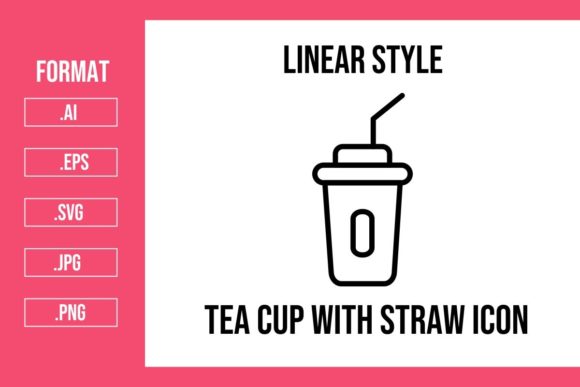
The teacup itself is simple, almost silhouetted, but the straw and the tiny strawberry icon on the rim add just enough detail to make it recognizable. There’s no clutter. The composition feels airy and modern, which means it won’t overpower a product. If I were to digitize this for machine embroidery, I’d predict strong satin stitch outlines with light fill areas on the cup body, and a small, dense satin strawberry that pops. The straw would be a single running stitch or a narrow satin path — easy to execute cleanly. It’s a design that reads quickly, which is essential for embroidery. You don’t want a customer squinting at a tote bag trying to figure out what they’re seeing. The Tea Cup with Straw Icons is instantly legible, even from a few feet away.
Where This Design Actually Feels Right at Home
I’ve been testing this concept in my mind across a few real-world scenarios. Last week, I was prepping a custom order for a small batch of bridesmaid gifts — canvas tote bags with a tiny, tea-themed design near the bottom corner. The Tea Cup with Straw Icons would have been perfect. It’s delicate, feminine, and carries that soft “treat yourself” energy. I can also see it on a half-apron for a baker, stitched in a single color on a natural linen pocket. For baby clothes, it would make a darling onesie graphic — small, sweet, and not too dense, so it won’t irritate sensitive skin. On a sweatshirt, placed on the left chest or wrist, it becomes a subtle, personal accent rather than a loud logo. The design works effortlessly for kitchen towels, pillow covers, reusable tea bags, even a embroidered patch to pin on a jean jacket. It’s the kind of icon that small business owners and Etsy sellers can build an entire mini-collection around — think “tea lover’s bundle” paired with a teapot or a lemon slice.
Fabric and Size Realities: When to Pull Back
No matter how charming a design is, embroidery has hard limits. The Tea Cup with Straw Icons, with its fine strawberry detail and thin straw line, needs a hoop size that can accommodate clean small-lettering-level precision. If you’re trying to squeeze this into a 4x4 hoop, you’ll need to scale it up just enough to keep that strawberry recognizable. I’d recommend testing at 3 inches wide minimum. On textured fabrics like terry cloth or waffle weave, the straw might lose its crispness, so I’d either enlarge the whole design or omit the straw for a simpler version. On dark fabrics, the contrast of thread colors becomes critical — a pale pink teacup on black might look sweet, but the strawberry’s red can blend in if you’re not careful. Also, avoid placing this on stretchy knits without a solid cutaway stabilizer; the satin stitches on the rim could distort after washing. Caps are tricky because of the curved surface — the straw might appear bent unnaturally. A flat placement, like a tote bag or a pillow, is your safest bet.
How It Affects Perceived Value and Customer Trust
When a buyer sees a finished embroidered product with the Tea Cup with Straw Icons, I suspect they’ll feel a sense of gentle nostalgia. It’s not a generic, mass-produced graphic. It has a handmade boutique feel, which directly supports pricing confidence. A well-stitched version of this on a linen tea towel immediately elevates a simple kitchen accessory into a small luxury — the kind of thing someone buys as a hostess gift or a personal treat. The design’s clarity also builds trust. If the stitches are clean and the strawberry is recognizable, the customer perceives quality. Conversely, if the detail blurs, trust erodes. That’s why I always test stitch density and thread colors on scrap fabric before I ever list a new product. For a digital embroidery file seller, this design could be a strong addition to a commercial license library, but only if the digitized file is properly tested and the small details hold up. A printable mockup using the original icon graphics can also help buyers visualize the end product before they purchase the embroidery file.
Practical Stitching Notes I’d Write for Myself
Before I’d ever stitch this on a client piece, I’d run through my usual pre-flight checklist. First, I’d open the original vector files — the .AI, .EPS, or .SVG formats — and check the minimum detail size. The strawberry’s seeds, if present, need to be reduced to a few simple dots or eliminated entirely for clean embroidering. I’d convert the design to a black and white mockup to see if the silhouette still reads. Then I’d select thread colors: a warm cream for the cup, a soft coral or berry red for the strawberry, and a muted green for the tiny leaf. The straw could be a pale yellow or even a metallic silver, depending on the look. I’d test on a medium-weight cotton with a medium-weight cutaway stabilizer, and I’d stitch at a moderate speed to avoid puckering around the satin edges. I’d also check the design’s stitch direction — I’d want the fill on the cup to run horizontally to mimic a ceramic surface, and the strawberry to have a small, tight tatami fill for texture. These are the tiny decisions that turn a nice icon into a professional embroidery project.
From Digital Icon to Embroidered Keepsake
It’s worth remembering that the original Tea Cup with Straw Icons is a graphic asset, not a stitch file. The fact that it comes in robust vector formats gives digitizers a huge head start. A clean SVG can be imported into embroidery software, resized without losing quality, and converted into a running stitch outline in minutes. The .PNG and .JPG versions are useful for creating mockups or listing photos, but the real digitizing work will rely on the vector paths. If you’re selling the finished product, you’ll need to confirm that the original icon’s license allows commercial use in physical items. The description says “Icon your for Websites and Applications,” but many crafters will rightly want to use these graphics for embroidery creation. Always verify the license terms before you invest hours in digitizing. If you’re buying a pre-digitized embroidery version of this design from a third party, ask for a stitch-out photo, not just a digital preview. The tiny straw can be a disaster if the digitizer used a single running stitch that’s too long or too loose.
Is It Right for Your Craft Business?
If you sell handmade products at craft fairs, on Etsy, or through your own shop, the Tea Cup with Straw Icons can become a quiet workhorse. It’s the kind of design that attracts customers who love tea, who appreciate subtle whimsy, and who are looking for a personalized gift that feels thoughtful but not overly complicated. It works beautifully on a set of cloth napkins, a zip pouch for tea bags, or a simple unisex sweatshirt. The gender-neutral, ageless appeal means you’re not limiting your market. For digital product sellers, a well-digitized embroidery file of this icon, paired with a clear, attractive mockup showing it on a tote bag or a pillow, could perform steadily. The key is to stitch it out, photograph it honestly, and let the handmade charm speak for itself. I’d recommend listing it in at least two size variations: a larger one for tote bags and a smaller one for patches or baby items. And if you’re using it for commercial embroidery on apparel, always test the design’s durability after a few washes. The last thing you want is a customer returning a tea towel because the little strawberry started to fray.
This design has a quiet, friendly confidence that I’ve come to trust. It’s not shouting for attention. It’s the kind of embroidered detail that makes someone smile when they notice it, and that’s exactly what handmade products are supposed to do.